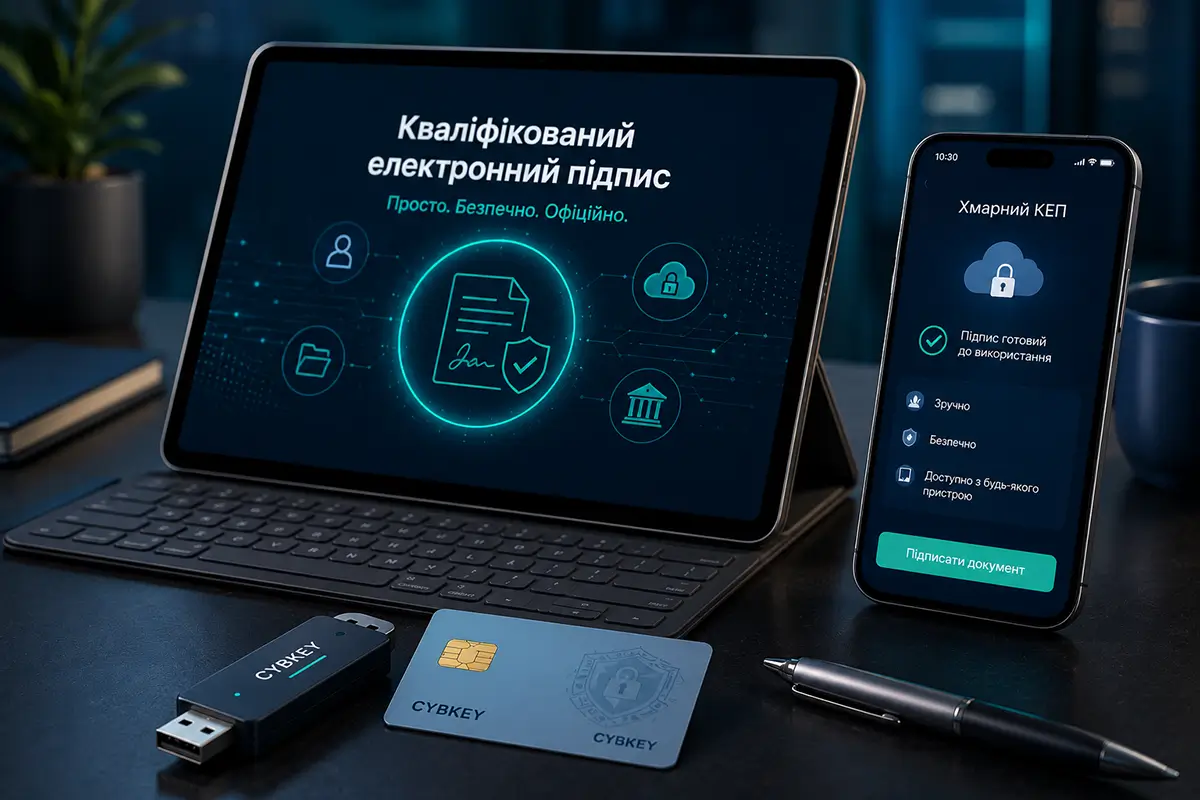
How to Get a QES in Ukraine in 2026
A few years ago, a qualified electronic signature was still associated by many Ukrainians with tax reporting, USB drives, and long visits to public institutions. But the situation has changed. Today, a QES has become a normal working tool for businesses, private entrepreneurs, accountants, legal professionals, medical organizations, and ordinary citizens who want to use government online services without unnecessary paperwork.
In 2026, you can get a QES in Ukraine through banks, qualified trust service providers, or commercial electronic signature platforms. In most cases, you will need a passport or ID card, a tax identification number, and identity verification. Depending on the provider, users can receive a file-based or cloud-based QES for government services, tax reporting, and electronic document management.
What Is a QES in Simple Terms?
A qualified electronic signature is a digital equivalent of a handwritten signature that has legal force in Ukraine. In simple terms, it confirms who signed a document and proves that the document was not changed after signing.
Today, QES is used not only for tax reporting. It is actively used in banking services, electronic document management systems, medical platforms, tender platforms, CRM systems, and internal business processes. For many companies, it has already become part of everyday work.
Who Usually Needs a QES?
In 2026, a QES is used by private entrepreneurs, company directors, accountants, lawyers, doctors, public sector employees, and business representatives who have the authority to sign documents on behalf of an organization.
In medium-sized and large companies, several separate signatures are often issued for different roles — for example, for the director, accounting department, and responsible managers.
Where Can You Get a QES in 2026?
Today, getting an electronic signature is much easier than it was several years ago. Many users obtain a QES through banks, because part of the identity verification process can be completed automatically. This is convenient when the user already has verified personal data in the bank’s system.
Another option is to use qualified trust service providers. Many entrepreneurs and accountants choose this route for tax reporting and working with government registries.
Commercial electronic document management platforms are also developing actively. They are especially useful for businesses that want not only to sign documents, but also to automate approval workflows, work with teams remotely, and integrate signatures into CRM or ERP systems.
What Documents Are Usually Required?
For individuals, the process usually requires a passport or ID card, a tax identification number, a phone number, and an email address.
For legal entities, the process may also require company documents, EDRPOU data, appointment orders, or powers of attorney. The exact list depends on the selected provider.
File-Based QES or Cloud-Based QES?
For a long time, most users worked with file-based keys stored on USB drives or protected carriers. This format is still common, especially in accounting and in older government systems.
However, the market is gradually moving toward cloud-based solutions. Businesses increasingly want to sign documents not only from an office computer, but also from a phone, tablet, or laptop while working remotely.
Cloud-based QES is becoming popular because it reduces dependence on physical carriers and makes document workflows more flexible.
Typical Problems When Using a QES
Although electronic signatures have become much more accessible, users still face problems. In many cases, these problems are caused not by the technology itself, but by poor digital habits.
Some users still set weak passwords or store passwords near the key file. Others send access data through messengers or email. In small companies, one signature is sometimes used “for everyone,” which creates serious security and legal risks.
Another common issue is outdated software. Old browsers, outdated cryptographic libraries, incompatible drivers, or legacy corporate systems may cause signing errors.
Why Businesses Are Moving Away from Paper
Paper-based document flow is no longer cheap or convenient. The cost is not only about printing and delivery. Paper processes slow down approvals, complicate archiving, increase the risk of mistakes, and make it harder to find old documents quickly.
For a small company, these delays may not seem critical at first. But as the business grows, small inefficiencies begin to accumulate and affect everyday productivity.
This is why even companies that were skeptical about electronic signatures are gradually switching to digital document workflows.
Is a QES Secure?
Yes, if it is used correctly. Modern electronic signatures are based on cryptographic mechanisms that confirm authenticity, protect document integrity, and reduce the risk of forgery.
However, security depends not only on technology. Even the best signature solution will not help if passwords are shared, key files are stored carelessly, or employees use one signature for multiple people.
This is why companies should treat QES not only as a legal tool, but also as part of their digital security system.
How QES Changes Business Workflows
Today, an electronic signature is no longer just a tool for submitting reports. For many companies, it has become part of digital infrastructure, just like corporate email, CRM, or cloud services.
Businesses use QES to sign contracts, approve acts of completed work, manage HR documents, participate in tenders, and organize internal approvals between departments.
This became especially important after many companies moved to remote or hybrid work models.
Why Demand for QES Continues to Grow
Ukraine remains one of the most active countries in the digitalization of public services. More and more processes are moving online: registrations, licenses, reporting, contracts, and interaction with government platforms.
In almost all these processes, electronic signature becomes a key element of digital identity.
For businesses, this means fewer paper documents, faster workflows, and less bureaucracy. For users, it means the ability to solve many issues remotely without visiting institutions in person.
Conclusion
In 2026, a qualified electronic signature has become a standard tool for digital interaction in Ukraine.
Getting a QES is much easier than it used to be: services are more convenient, identity verification is simpler, cloud-based solutions are becoming more common, and integration with government and business systems is improving.
At the same time, the convenience of electronic signatures brings responsibility. When choosing a QES solution, it is important to consider not only how quickly it can be issued, but also how securely it will be used and stored.
Today, an electronic signature is no longer just a file or a USB drive. For many companies, it is one of the key tools of secure digital business.